Monday - Friday 07:30 - 17:30, Saturday 07:30 - 16:00
Floor Sanding and Finishing in Luton
Back to Portfolio
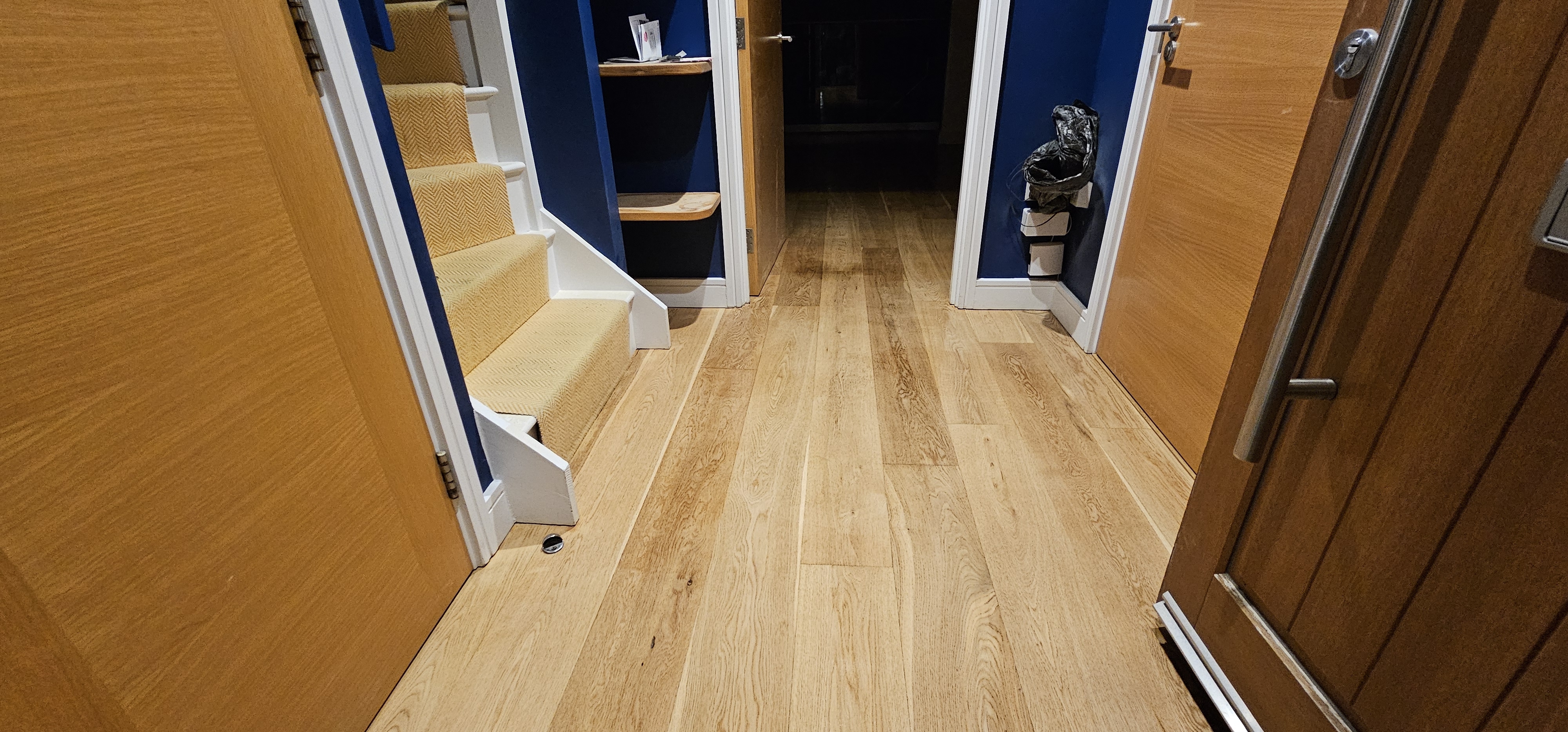
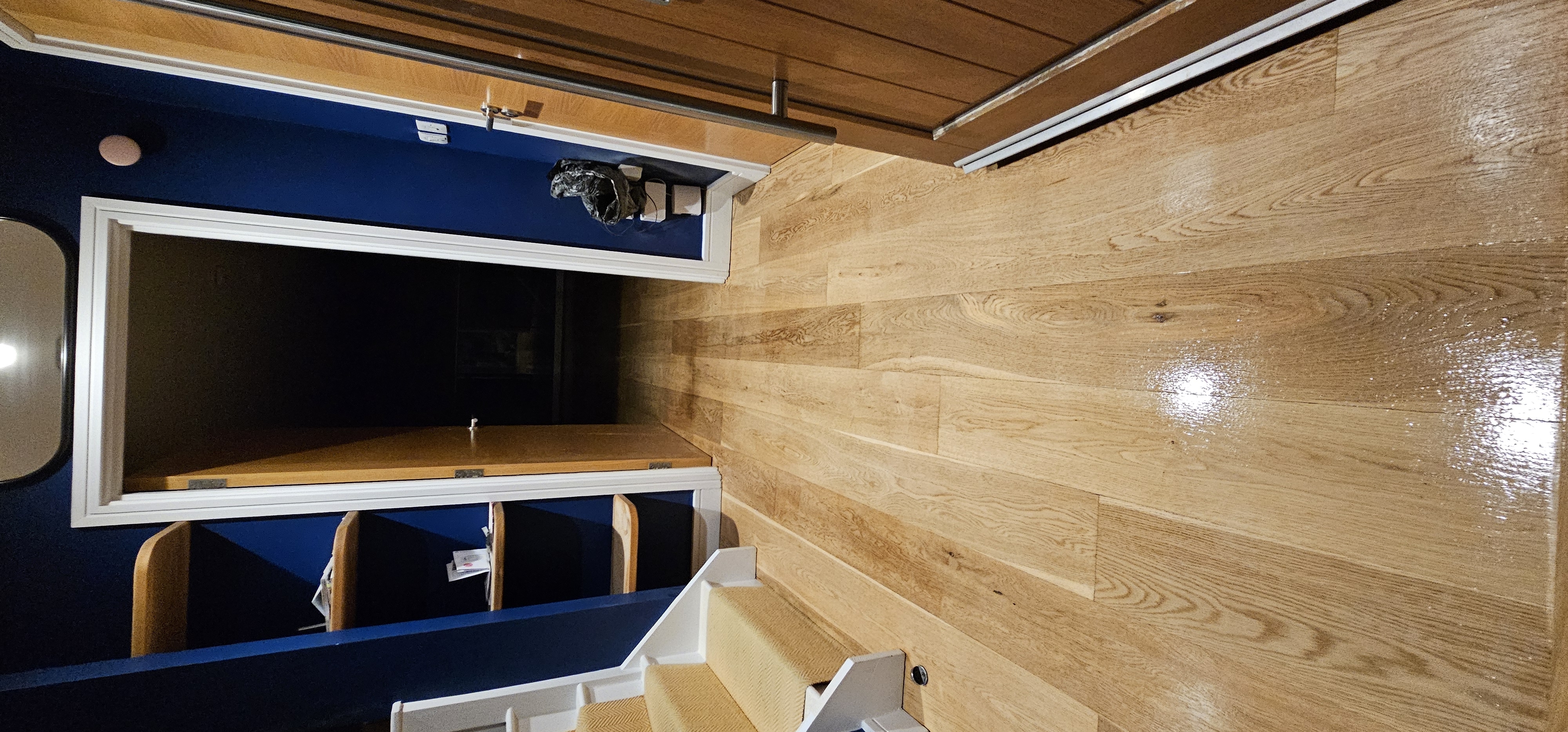
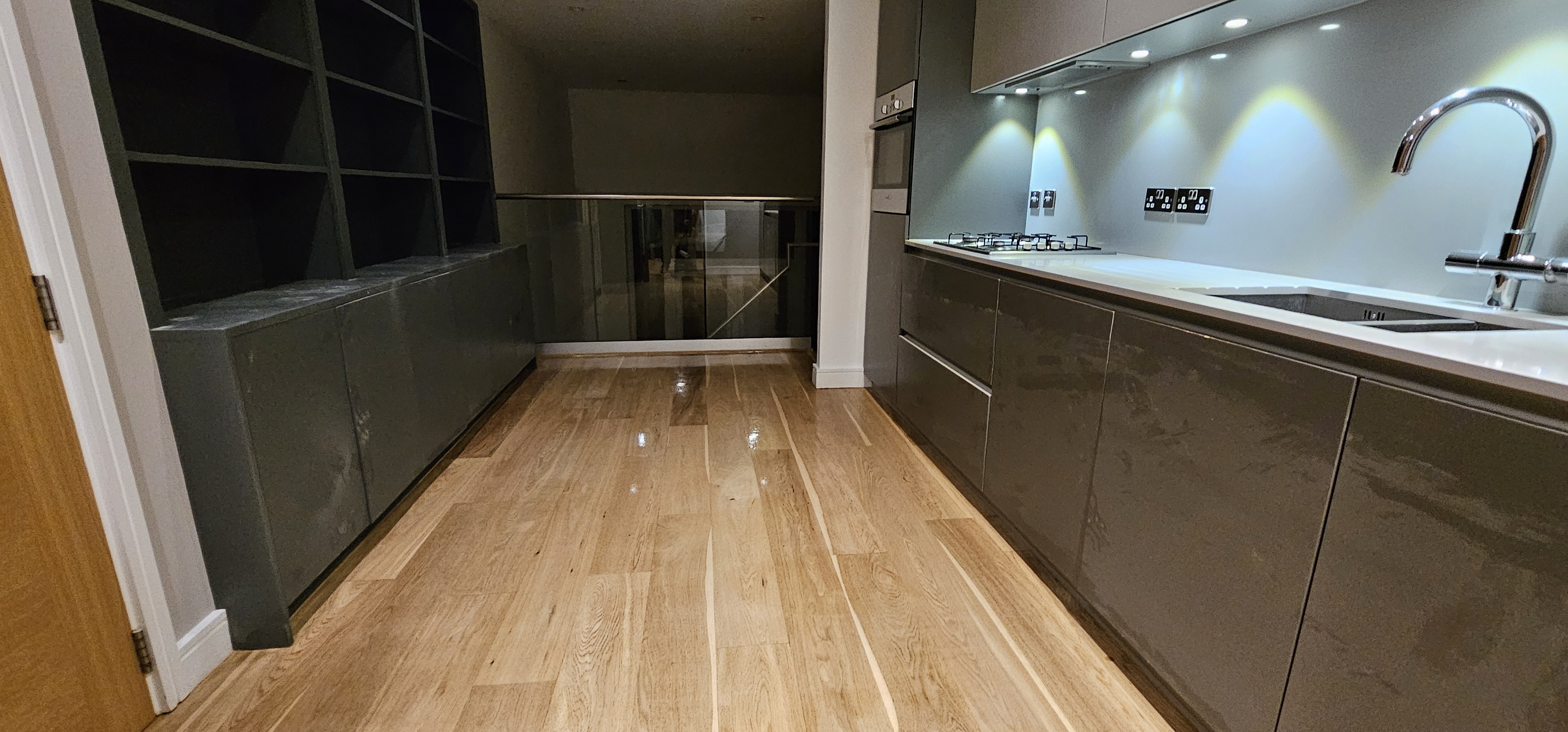
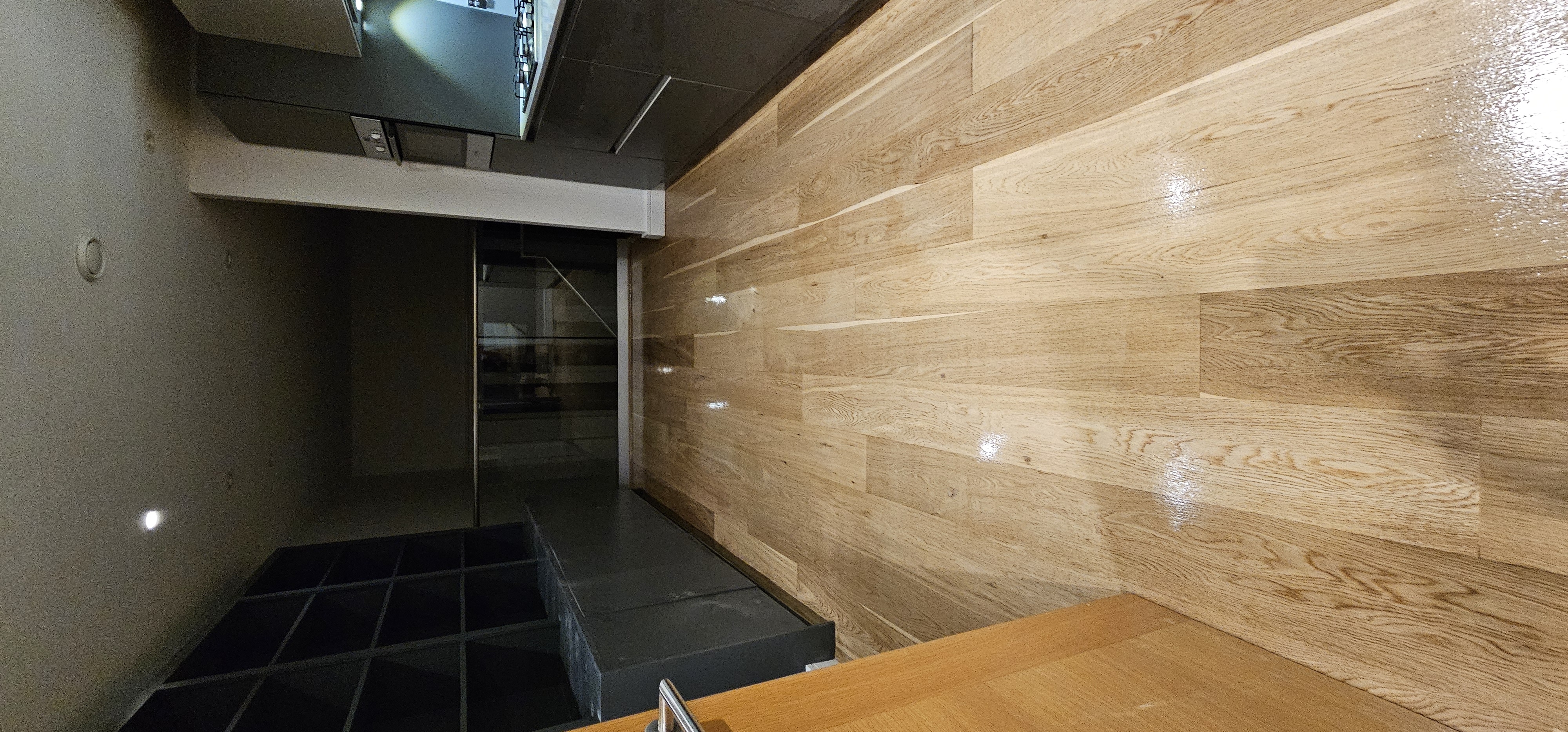
Floor Sanding and Finishing in Luton
This Edwardian semi-detached property in Luton had original Victorian pine boards running throughout the ground floor, buried under decades of varnish and surface damage. The owners wanted the natural grain brought back to life without replacing the timber. We completed a full sanding and finishing project, bringing these boards back to their original character.
Work carried out
- Complete floor sanding using industrial belt and orbital sanders
- Dust containment and extraction throughout the process
- Grit progression from 40 to 120 for smooth finish
- Wood stain application in medium oak
- Three coats of water-based polyurethane finish
- Edge sanding and detailing work
About the project
The boards had significant old varnish layers and some surface wear marks that required careful removal. We couldn't simply sand through quickly without risking exposing the grain to uneven colouring. The approach was steady grit progression, starting with 40 grit to break through the old finish, then moving through 80 and 120 to achieve a clean, prepared surface. The entire ground floor came to roughly 45 square metres, which meant three days of sanding work.
The main challenge was managing dust in what was an occupied property. We installed temporary barriers between rooms and used a dust extraction system connected directly to the sanders. The owners could remain upstairs without excessive inconvenience. Once sanding finished, we allowed 24 hours for the dust to settle before vacuuming and tack wiping. The wood stain was applied in two coats with 12 hours between each, followed by the polyurethane finish coats. The whole project took five working days from start to full cure.
About our Luton service
Luton has a good mix of property ages, from Victorian and Edwardian terraces and semi-detached homes to 1960s estates and new build developments. We work regularly across all of these. The Victorian and Edwardian properties often have original timber boards, usually pine or occasionally oak, and these respond particularly well to sanding and refinishing. Many have been covered with carpet for years, and the owners are surprised at the quality of timber underneath. 1960s homes tend to have either timber blocks or parquet, while newer builds come with engineered boards or laminate. Our sanding work focuses mainly on solid timber, whether that's boards, blocks, or parquet flooring.
The Luton area properties we encounter often need moisture checks before we start, particularly in older homes. We test moisture levels to ensure the timber is stable before sanding. The local Victorian stock tends to settle well, and we rarely encounter significant movement issues. For the Edwardian properties, the boards are typically wider and of better quality than later Victorian work, which makes finishing them more rewarding. Most Luton customers are looking to restore original character rather than achieve a contemporary look, so medium and darker stains are popular choices.
Frequently asked questions
How much does floor sanding cost per square metre?
Sanding costs typically run between £25 and £45 per square metre, depending on the condition of the existing floor and whether it's a simple sand or needs additional stain and finish work. A floor in good condition with just one varnish layer will be at the lower end. Floors with multiple finishes, stains, or damage will cost more. For this Luton project, we charged £35 per square metre as the old varnish required careful removal.
How long does sanding take?
A typical ground floor of 40 to 50 square metres takes three to four days of sanding work, plus additional time for staining and finishing coats. The process can't be rushed as each grit stage needs proper completion before moving to the next. Drying times between stain and finish also add to the schedule. Most projects are complete within five to seven working days from start to walkable finish.
Is the sanding process dust free?
Modern sanding equipment with dust extraction systems keeps airborne dust to a minimum, though some fine particles will always be present during the work. We use HEPA filters and seal off the work area from the rest of the property. After sanding completes, thorough vacuuming and tack wiping removes settled dust before finishing begins. The process is far cleaner than sanding without extraction, though it's still advisable for occupants to stay away from the work area during active sanding.
Project Gallery